
Kin, Not Machines
A Christian Doctrine of Creation, Part 12


J.R.R. Tolkien hated street-lamps.
Not, I’m sure, the quaint, Victorian lamp imagined by his good friend C.S. Lewis in the woods of Narnia. No, it was “electric street-lamps of the mass-produced pattern,” Tolkien disliked. He’s quite scathing of them in his essay On Fairy Stories, calling them “bad lamps,” as if they were misbehaving dogs, and ugly, “insignificant and transient.”
He also hated factory chimneys, cars, the roof of Bletchley Station, the bridge to Platform 4, municipal swimming baths, machine guns, and bombs.
We might be tempted to dismiss Tolkien as a tweed-jacket-wearing (true), pipe-smoking (true), curmudgeon (often true), but isn’t he also right?
I wrote about the ubiquitous and aggressive ugliness of the modern world here:
So much of modern life has a quality of shoddy ugliness: flatpack furniture, cam locks already stripping the particle board; single-use plastic; polyester; cinder blocks; malls; chip-sealed roads; box houses in a row; concrete slabs stained with oil; trucks belching black smoke; cables tangled on the floor; chipped chrome faucets; faux leather; Styrofoam; disposable vapes in the gutter; parking lots with stunted trees; dust covered fake flowers in a cafe beneath fluorescent lights.
Everything cheap, shoddy, disposable—ugly. Not to mention the AI slop flooding our online world with an ugliness so deep and wrong it feels existential.
Tolkien quotes historian Christopher Dawson, who argued, “The rawness and ugliness of modern European life is the sign of an insufficient or false relation to environment.”
Tolkien and Dawson are right. The architectural, industrial, environmental, and moral ugliness of the modern world arises—like some haunting ghost, or a Frankenstein cobbled from the pieces of our broken world—from a false relationship with the environment, with nature, with the created and real order of things.
The nature of the falseness is itself caught up in the use of the word “environment.” The word gives an impression of creation as something outside of us, something we don’t belong to, as a more or less passive set of objects on which we act, among which we move. Heidegger’s “standing reserve.”
To be modern is to be uprooted, to be numbed of any real, sustaining feel for place, for one’s animal belonging to the created world. And for Tolkien, and for many others, this has birthed the quality of ugliness so characteristic of modern life. Our buildings, businesses, entertainments, and technologies have grown unchecked by any natural limit, like cancers, like monsters in a gothic fairy tale. And it is not just the external world that is left scarred, but our own inner worlds. We often feel bereft, wounded, grieved by the sense that our own lives are, somehow, “insignificant and transient,” as mass-produced and false as electric street lamps. We feel cast adrift, exiled, from some home—some feel for a place—we have never known by which we long to return.
In the words of another fantasy writer, Ursula Le Guin, “To use the world well, to be able to stop wasting it and our time in it, we need to relearn our being in it.” This relearning has been the purpose of this series on the Christian doctrine of creation. I have used the metaphor of doctrine as a map. Doctrine is not the world itself, but a map of the world; the fruit of long and faithful reflection by the people of God under the guidance of the Spirit. We need maps. Left to ourselves, we often get lost, and a map locates us. This series, so far, has been an effort in location. But that’s not all that maps do. Maps also reveal how to get to where we need to go. They are designed to be used.
In this essay and the following, I want to explore what it might look like to navigate our way in the world according to the map of Christian doctrine. We have explored what the world looks like, now we ask, what it is like to live here, and how might we live here well?
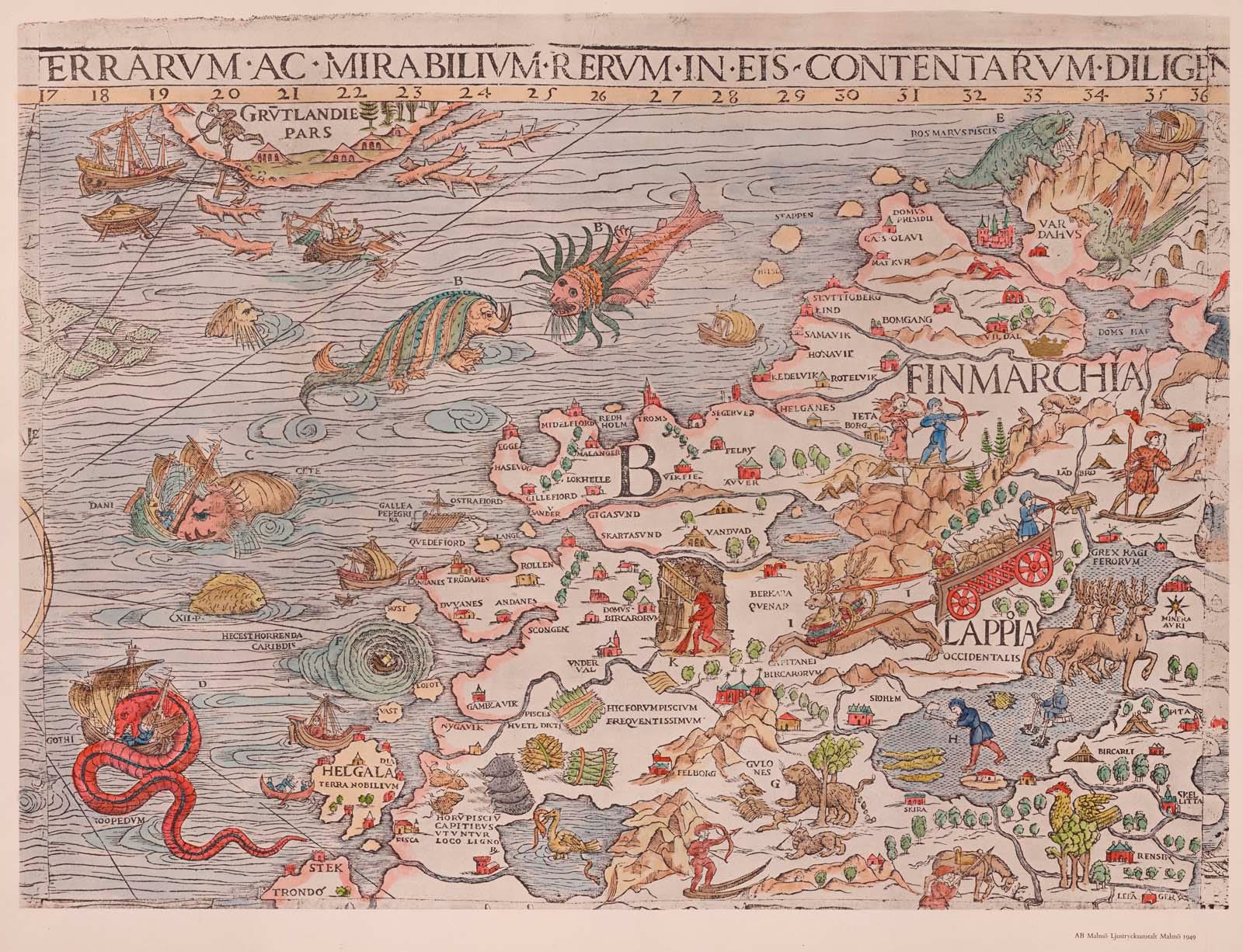
Something to note up front: it is not obvious that Christianity does show a better way to live. Within the environmental movement, there’s a long history of distrust toward Christianity. Many believe “that the Western Christian worldview supports and encourages humanity’s aggressive project to dominate and exploit nature.” This was the argument of the medieval historian Lynn White Jr in a famous 1967 article called, “The Historical Roots of our Ecological Crisis.” White argued that:
[Christianity] not only established a dualism of man and nature but also insisted that it is God’s will that man exploit nature for his proper ends… Christianity made it possible to exploit nature in a mood of indifference to the feelings of natural objects.
White concludes Christianity “bears a huge burden of guilt” for the modern ecological crisis; it is a cause, in other words, of the “false relation” bemoaned by Tolkien and Dawson. Far from helping us walk beautifully upon the earth, Christianity has been the source of much ugliness.
I think White is wrong, but it’s a stubborn enough belief, and has enough historical evidence in its favour, that it’s worth articulating in what ways White is wrong. In this essay, my focus is on the first of his critiques, that Christianity “established a dualism of man and nature.”
A careful reading of Genesis 1 suggests that such a Christianity is a monstrous deformity. Consider the evidence in the text. One thing we often miss in our reading of Genesis 1 is that the text is clear that there is a whole world that precedes. We—human beings—step onto the stage of an unfolding play, complete with a varied cast; we are set among a great company of fellow creatures, a “family of things,” in Mary Oliver’s phrase: the sun and the moon; the sky, sea, and earth; birds and animals and plants. The author of Genesis wants us to perceive ourselves as members of a cosmos, an intelligent order of things. We are not alone in the world. We don’t even get our own day of creation, but share it with other land creatures: livestock and wild animals.
We see the significance of this—indeed, its radical nature—more clearly when we consider other ancient creation stories. In most, the creation of animals and plants is told as independent stories, separate from the stories of human creation. The concern is not to explain the origin of vegetation or animals as part of the world, but with the meaning of certain plants and animals for humans: the origin of wheat, nuts, or cattle, for instance. In contrast, in Genesis 1, plants and animals are not considered primarily in terms of their use for us, but on their own terms. The interest is not merely functional. Plants and animals are fellow creatures sharing a common beginning and home with humans.
The name Adam is another way the text makes the point. In Genesis 2, we meet an individual human male named Adam, but that’s not who is named in Genesis 1. In Genesis 1:26 and 27, “adam” is best translated “humankind” and represents all of us, both male and female: “So God created human beings [adam] in his image. In the image of God he created them. He created them male and female.” The Hebrew word adam is connected to the Hebrew word for ground, for earth, adamah, and deliberately draws our to the stuff we’ve been made from—adam from adamah. The account in Genesis 2 makes the connection even more explicit: “Then the Lord God formed the human [Adam] from the dust of the ground [adamah] and breathed into his nostrils the breath of life, and the man became a living being” (2:7).
The formula for the creation of human life, as Norman Wirzba points out, is soil + divine life.
At times, there has been a tendency for Christians to conclude that the soul is the central element of the human person. But to do so is to distort and misconstrue our nature. We humans are from the earth—a unity of soul and body. As Thomas Aquinas said, “My soul is not me.” We are body and soul composites, and that connects us into the created world with all other creatures—with the life-systems of this planet that sustain material life. We are earthlings made for life on earth. In fact, the same term “living being” we read in 2:7 is used of the sea creatures in 1:20 and the land animals and birds in 2:19; and in Genesis 7:22 the flood destroys everything that has the breath of life in its nostrils. The focus is on our connection to other creatures.
So think then of White’s claim that Christianity teaches a dualism between humanity and nature. It is false. Genesis does not give us dualism. We are not outside of creation, but within creation, entangled with the natural world, named from its very soil. This is the context in which we must make sense of our lives.
Here the biblical picture chimes with the findings and reflections of modern science. Today, there is pushback within the scientific community against terms like “nature” and “environment” that suggest humans are separated from the other-than-human world. There’s a growing awareness of our entanglement with the rest of creation.
Some of this changing perspective is a recognition of the obvious: we are dependent, just like any animal, on air, water, soil, insects, trees, fruit, and other animals—the stuff of this earth. Michelle Nijhuis observes, “My human household is part of an ecosystem—one populated with, and supported by, a variety of species living in relationship with one another.” To not see this is to be blind to the truth of reality, to live falsely. Sadly, what makes this so obvious is the negative ways our entanglement with the rest of creation is expressed. What we do in our households and cities impacts life everywhere.
Further, evolutionary science reminds us that we are connected by origin to other animals. Made of the same stuff. So as ecologist Lyanda Haupt writes: “We live in a wild communion of absolute mutual dependence, connected in our ancestry and our continuation.” Indeed, not only are we made of the same inanimate stuff, our bodies themselves are home to hundreds of trillions of microbial species on whom we are dependent, who help us digest food, regulate mood, clean our skin, and perform a thousand other small, often thankless tasks. “The human body is a vast ecosystem,” as David Montgomery puts it. We are entangled at a fundamental level with other creatures, large and small. We are not independent.
In order to live in reality, in the world revealed by both Scripture and science, we need to recognise our deep connection with and dependence on the other-than-human world. And for some of us, this requires we relearn our being in the world.
So, how might this be done?
One answer is to think deeply about language.
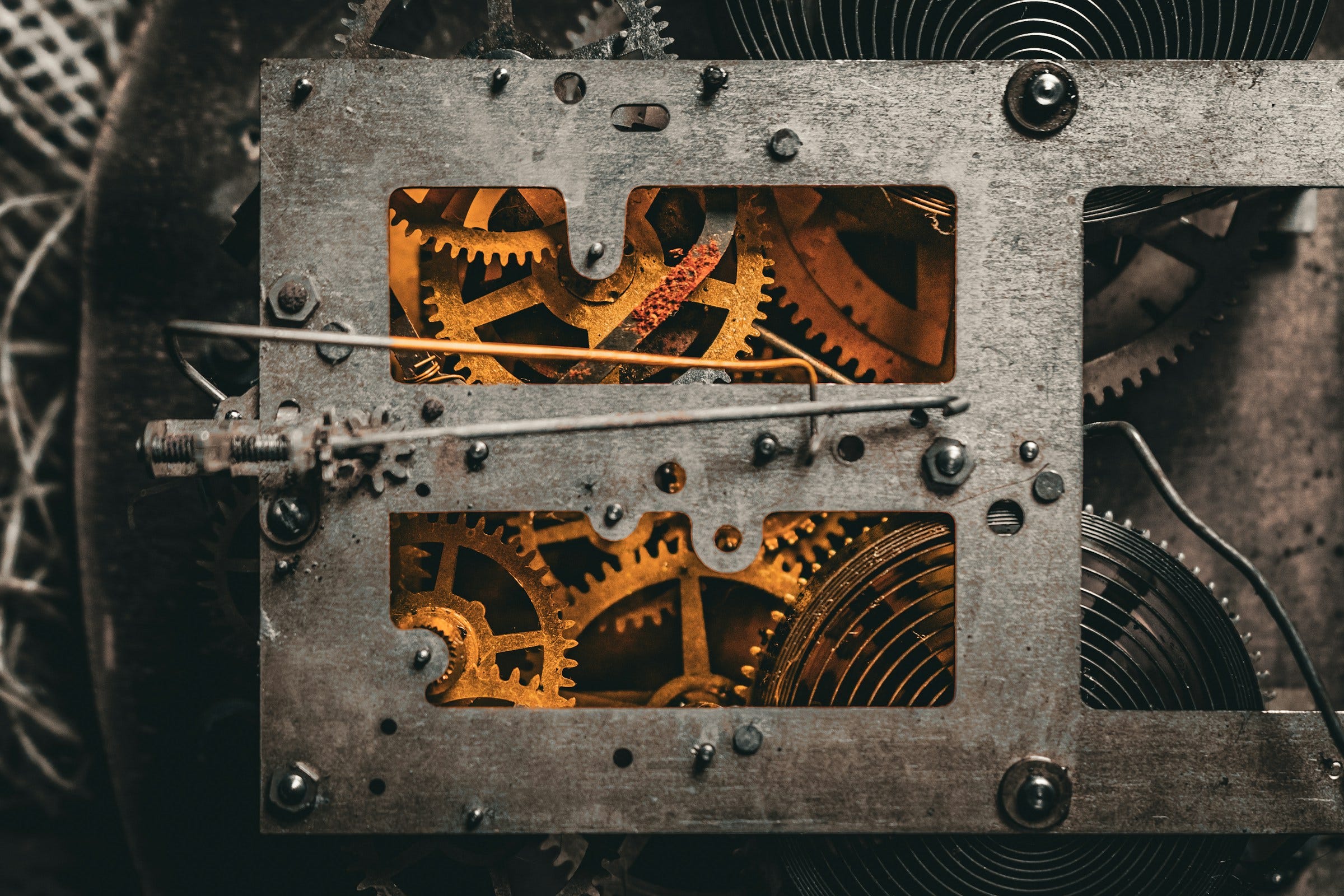
Over the last few centuries, the dominant model for understanding animal life has been that they are elaborate machines. The mathematical model of the world that began to emerge in the scientific revolution and the Enlightenment was applied to animals. French philosopher René Descartes, for example, was happy to slice open living dogs and insert his fingers into the ventricles of their hearts while they still pumped, in order to understand “how the machine works.” As machines, their pain was not real—only an appearance, no more significant than “the squeaks and groans of an unoiled hinge.” We wouldn’t worry about the feelings of a clock, no matter what sound it made, so why worry about the feelings of an animal? This is grotesque and extreme, but listen to Richard Dawkins, the evolutionary biologist, in his breakthrough book The Selfish Gene:
We are all survival machines for the same kind of replicator—molecules called DNA—but there are many different ways of making a living in the world, and the replicators have built a vast range of machines to exploit them. A monkey is a machine which preserves genes up trees; a fish a machine which preserves genes in the water.
Dawkins, no doubt, would not encourage cruelty, but how we describe things matters. We relate to machines in certain ways. They exist for our use and convenience. Part of our relearning our being in the world is to find new language to describe the other-than-human world. Robert MacFarlane puts it this way:
Language is fundamental to the possibility of re-wonderment, for language does not just register experience, it produces it…. Certain kinds of language can restore a measure of wonder to our relations with nature.”
Scientist Suzanne Simard urges that we need to “re-envelop ourselves in our natural world” and recognise that
we are just part of this world. We’re all one, together, in this biosphere, and we need to work with our sisters and our brothers, the trees and the plants and the wolves and the bears and the fish. One way to do it is just start viewing it in a different way: that, yes, Sister Birch is important, and Brother Fir is just as important as your family.”
Sister Birch. Brother Fir. To “re-envelop ourselves in our natural world,” Simard reaches for kinship language. She is not alone. The move to name other creatures as kin is gaining traction in both the scientific and nature-writing communities. I quoted Lyanda Haupt earlier—here’s the full quote:
The earth and all that dwell herein--the rooted, feathered, furred, scaled--are relations, our dear kindred. Kin is from the Old English, of the same kind. Together, we are made of the fine things: clay, salt, water, stardust. We live in a wild communion of absolute mutual dependence, connected in our ancestry and our continuation.”
Kinship language is an attempt to create a new sense of relationship with and responsibility for the created world. Kin and machine are two radically different ways of seeing the other-than-human-world.
The point I want to make is that kinship language is Christian language dating back millennia. The rationale might be different—we are children together of the same creator God, dwellers within a common home—but the impulse is the same: to guard a way of right relating to the other-than-human world. A famous example is Saint Francis of Assisi. “My little sisters,” he called the gathered birds to whom he preached a sermon in 1220AD. Or his more famous Canticle of the Sun, in which he names as co-members of the cosmic chorus of praise, Brother Sun, Sister Moon, Brother Wind, Sister Water, Brother Fire, and Sister Mother Earth.
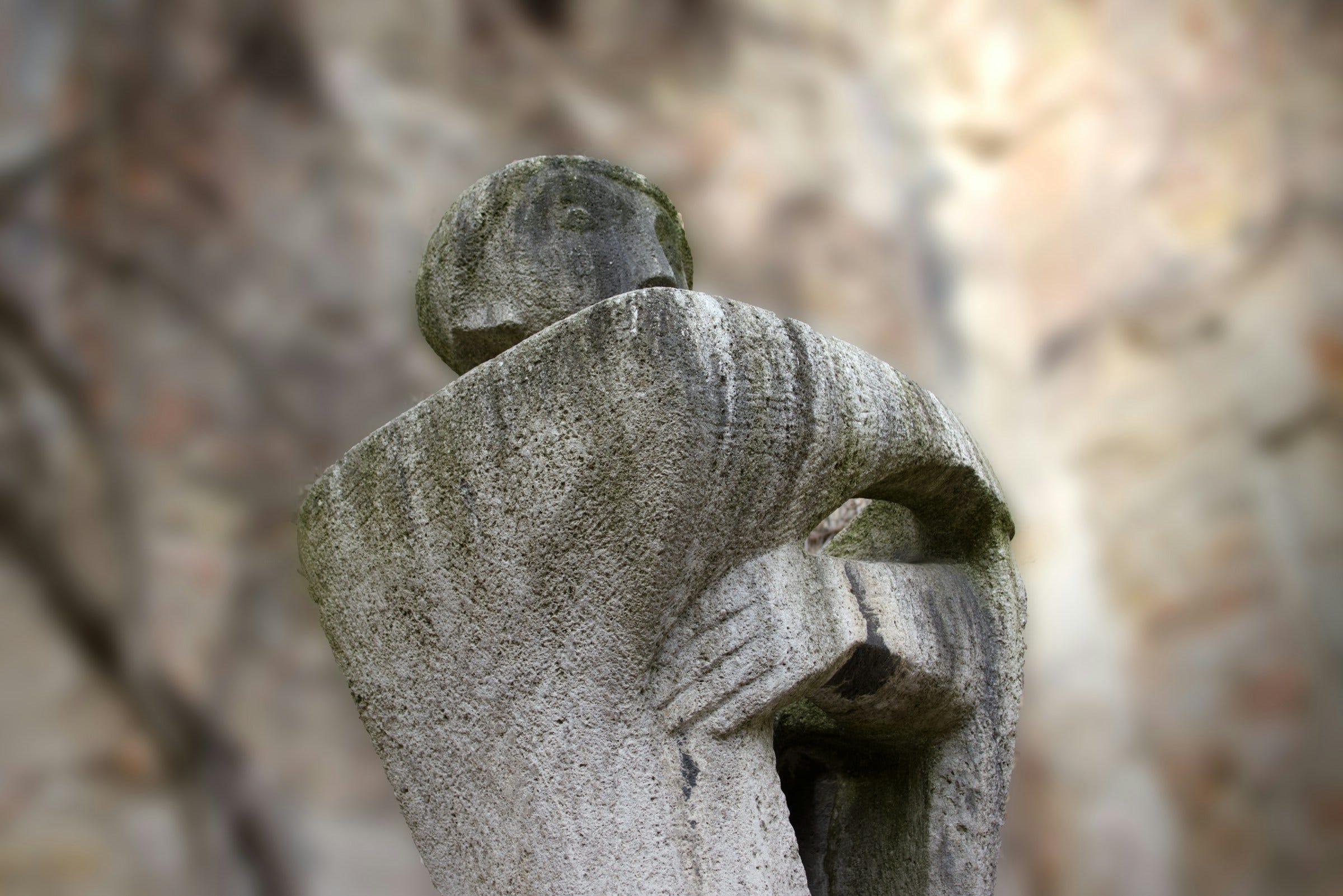
The Christian tradition is full of stories of the saints acting with brotherly or sisterly care and affection for animals. Francis himself would often rescue and release birds, fish, and rabbits others had captured, and provided bees with honey in the winter, or the best wine, lest they should die from the cold. Godric of Finchale, an English Hermit of the 12th Century, was known for going out on cold winter nights and searching under hedges and in briar patches for animals sick with cold, and he’d warm them up under his armpits, nursing them back to health. Saint Kevin of Ireland was praying one day in a little hut when a blackbird settled in the cup of his hands and laid an egg. The saint remained as he was until the eggs hatched.
There is story after story in our tradition like this—a great treasury. The tradition also tells stories of animals aiding, feeding, and protecting the saints—acting as kin to us. It is said that otters warmed the feet of Saint Cuthbert, a seventh-century monk, with their breath and their fur when he was praying on the beach. A stag came daily to Kieran of Ossory, and knelt before the monk, so he could use its antlers as a reading stand. It is said that the birds of the forest fell silent as Saint Cellach of Killala lay dying.
These stories may stretch the truth in the detail (though I’m not sure), but the point is to show that the life of holiness is displayed in a way of relating with care and compassion to other creatures—treating them as kin. Saint stories are the church’s long-term memory—its way of communicating wisdom to its body. The Christian tradition has long known the same reality that science is beginning to recognise. We are kin with other creatures and made for relationship with them. Maximus the Confessor, the great 7th Century monk, said this: “Man is not a being isolated from the rest of creation. By his very nature, he is bound up with the whole of the universe.”
Those of us who are Christians need to recover a sense of our kinship with other creatures. It is part of our inheritance. To know other creatures as kin is to open up new ways of being in the world. To be good kin is to reject indifference and ingratitude. It is to love other creatures for themselves, not simply for their usefulness. To be good kin is to recognise our responsibility to other creatures, for their health and flourishing. To be good kin is to act with kindness and affection toward other creatures, to stand up for them, protect them from harm and abuse, and show compassion for their suffering. To be good kin is to allow other creatures to be fully what God made them to be.
We are not alone in the universe. We belong to a great family of creatures with whom we are entangled. The world suffers, and we suffer because we are poor kin. We are a broken family that needs to be reconciled. Richard Macfarlane reflects on our alienation from creation—and observes:
We have in many ways forgotten what the world feels like. And so new maladies of the soul have emerged, unhappinesses which are complicated products of the distance we have set between ourselves and the world.
Tolkien hated modern electric street lamps. They were, for him, symptoms of our false relationship with the world. Electric lights blind as much as they reveal. They shine down and illuminate the things we have made—the streets and the cars—but obscure what lies beyond, what we have pushed away: the stars, the trees towering overhead, the night birds hunting for insects. All we can see is ourselves. And because of this, even we become obscure. Severed from our kin, we become strangers to ourselves. We are not human alone. We find our place and home as kin to all God’s creations. Cultural ecologist David Abram puts it this way: “We are human only in contact, and conviviality, with what is not human.”
Love the soil + divinity equation!
Do you know For the Love of Soil by Nicole Masters? She has some great info about the correlation between some of our gut microbes / that in soil & tells of Chinese traditionally taking a pouch of dirt with them from home when they travelled that they could eat a pinch of it to dispel a sore stomach. The We’ll Gardened Mind by Sure Stuart Smith is also full of accounts of how people are at their best with their hands in the ground & the converse - such a good read if you haven’t already…