
Whittling Reality Down to the Bone: Disenchantment
A Christian Doctrine of Creation, Part 4

“Only a great story can shelter us. It was my calamity that I had fallen out of my story. I had fallen out of a world into a universe that seemed infinitely indifferent, even hostile, to my purposes and yearnings.” (John Moriarty, Nostos)
Look at the world from Medusa’s perspective. This is the advice of philosopher Owen Barfield to those hoping to understand the modern person’s sense of the world. Medusa was one of the three gorgons of Greek mythology with writhing snakes for hair who turned to stone all who looked at her. Through her gaze, what was once alive, vital, and dancing is seen as dead, lifeless statuary. That’s the modern way of seeing the world, Barfield claims. Where once our ancestors saw life and movement and splendour, we see only dead matter. We have inherited Medusa’s gaze.1

Barfield was describing the experience of disenchantment. Alongside grief, wonder, and longing, disenchantment is a key contour of our modern relationship with the other-than-human world, a context for our exploration of the Christian doctrine of creation.
Disenchantment names, variously, a process, an experience, and a belief. Central is the idea that our pre-modern ancestors lived, struggled, and desired in a world very different from our own. A world where the Creator embroidered into the very fabric of reality, value, meaning, and purpose. Where divine intent and action were on display in storms, droughts, floods, plagues, and years of exceptional fertility and flourishing. Creation had a sacral, holy quality, was bright with “ontological and sacramental splendour” (David Bentley Hart).
And we were not alone. Each pocket and fold of the cosmos was home to non-human intelligent life. As C.S. Lewis put it, for our ancestors, “Every tree is a nymph and every planet a god.” To look up at the night sky was to glimpse a vast world filled with music and life. The planetary spheres were marvellous creatures rotating in perfect harmony attracted by the love of God—spiritual longing moved the very world.2 We found ourselves at home in a high and holy house, a “rich and genial universe” “tingling with anthropomorphic life, dancing, a ceremonial, a festival not a machine” (C.S. Lewis).
Not a machine. Vast incalculable distance separates the pre-modern sense of the world from our own. Like Medusa, when we gaze at the world our ancestors saw as alive and dancing, we see only dead matter, a lifeless machine. We have evicted from the cosmos all non-human meaning, purpose and intelligent life, whittled reality down to the bone, to passive matter acted upon by impersonal physical forces. There is no mystery. No inner depths. No spiritual world intrudes on us. Everything can be, or will one day be, explained exhaustively by science. When we look up at the night sky, perhaps having driven some way beyond the obscuring lights of the city, we feel ourselves to be standing at the edge of an infinite sea. We imagine ourselves, in the stark observation of Nobel prize-wining biologist Jacques Monod, as “alone in the universe’s unfeeling immensity, out of which [w]e emerged only by chance.”
Disenchantment signifies a shift from experiencing the world as a vibrant, meaning-laden, and spiritually alive realm to one perceived as mechanistic, indifferent, and ultimately devoid of inherent purpose. David Bentley Hart describes the stark contrast:
Once the whole world was alive; all things were, as Thales said, full of gods; all things were pervaded by God. When one gazed out at nature, another gaze—mysterious, fitful, terrifying, enticing—met one’s own. Nature was a realm of vital intelligence, of enchanting and terrifying mystery, and as such was to some real extent inviolable. Now we look out at a world composed from mindless mechanical forces and sheer blind chance, and absolutely nothing looks back.
He concludes, and it is chilling: “Full modernity was achieved by silencing the world, and by converting it into a mechanical arrangement of intrinsically dead matter.”
The story of how this shift occurred—the process of disenchantment—is complex and need not distract us here. In short, the rise of rationalism and the scientific revolution in the 16th Century rendered the world, in Max Weber’s phrase, “transparent and demystified,” exposed to the insistent probing of our scientific instruments designed to measure, magnify, and dissect the world to understand and use it. We live under bright lights in a great warehouse.
To be fully modern is to feel oneself living in a disenchanted world.3 Why does it matter?
I began this series by arguing that we have lost our way. Our ways of being in the world are often false, harmful, and unsatisfying. Disenchantment is both a cause and a symptom of our lostness.
We do not fear profaning what we already consider profane. Shorn of its holy character—“excarnated” in Charles Taylor’s haunting coinage—and emptied of non-human intelligent life, we see the natural world as lying wide open and available for our use. We traded mystery for mastery. “Having exorcised the countless spirits that once inhabited and animated the world, we feel free slowly and relentlessly to murder the world without remorse” (David Bentley Hart). Philosopher Martin Heidegger suggested we’ve converted “the whole universe of beings” into a “standing reserve” of natural resources for our use. We look at a tree and see not a fellow creature glorious with dignity and purpose outside our plans, but only cubic feet of timber.
And the harm disenchantment has done is not just to the world outside of us but to our own inner landscapes. Disenchantment provides an unsatisfying relationship with the world. This is disenchantment as a condition—adj. disenchanted, “no longer happy, pleased, or satisfied: disappointed, dissatisfied.”
This dissatisfaction wears many forms. Many people today feel the world has lost depth and thickness, been denied inner dimensions of meaning and mystery. The depths once located in the enchanted cosmos are now seen to live in us (Charles Taylor). Or, more graphically, “The Subject [us] becomes gorged, inflated, at the expense of the Object [the world]” (C.S. Lewis). It is now up to us to fill the world with meaning, and our stuttering attempts often feel hollow, little more than fridge magnet platitudes, the pastel mood board of a Disney movie. Reality is consequently left feeling thin, shallow, fragile—a paper lantern world kept aloft by our own hot air.
And despite being an almost exclusively human-made world, we nonetheless feel rootless, adrift from a natural order in which we used to be nested. The old cosmos was hospitable to our spiritual longings, was, in fact, moved by longing. Love, beauty, and purpose were built in, part of the created fabric of reality. But the disenchanted cosmos is ultimately indifferent to these qualities of human life. What something is—what it really is—is what we can measure and observe, its physical makeup and how it relates to other things in its environment. Consequently, the things we care most about—our everyday experiences of love, goodness, yearning, beauty, holiness or transcendence—are not really real, not essential features of reality but mere subjective glosses, categories added on to nature by humans rather than objective realities inherent to things in themselves. And this means we don’t feel we live in a world that is hospitable to us. C.S. Lewis describes his pre-conversion experience of the world, lamenting, “Nearly all that I loved I believed to be imaginary; nearly all that I believed to be real I thought grim and meaningless.”
Disenchanted. Unsatisfied. I want to suggest that a disenchanted world is dissatisfying because it is ultimately false. It presents a truncated view of reality, ignoring the depths of meaning humans intuitively crave. This persistent longing for a richer, more meaningful way of being in the world—a “bigness outside of us” (Wallace Stagner)—sets the stage for exploring the Christian doctrine of creation.
“Our age is haunted”, according to philosopher Jamie Smith. Not by ghosts, but by the loss of transcendence and mystery caused by disenchantment. Think of Sally Rooney’s immensely popular third novel, Beautiful World, Where Are You.
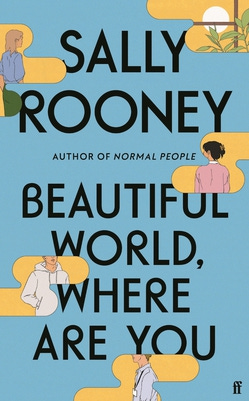
It is about the possibility of meaning and beauty in a world that feels fractured, spiralling. “Aren’t we unfortunate babies to be born when the world ended?” one character says. Another laments, “We are standing in the last lighted room before the darkness.” The title comes from a line in a poem written in the late 18th century by Friedrich Schiller, praising and lamenting the loss of an enchanted past where encounters with the divine were a daily experience. David B. Gosselin’s translation of the first stanza reads:
Oh beautiful world, where art thou flown?
Oh face of nature’s purest bloom, return!
Now only in the fairy land of song
Still lives the image for which we yearn.
And barren mourn once blooming fields
No Godhead lights up nature’s visage
How from the world’s every living image
Naught but a shadow yields!
Here now is our question: “Beautiful world, where are you?” The Christian doctrine of creation holds that we do not live in a disenchantment world but a world made beautiful, where meaning, value, and purpose are dimensions of the topography of reality. A world in which we are not alone but at home among a chorus of creatures. We don’t need to throw out science to recover this sense of things. Science can be a source of wonder and enchantment. But we must resist the cold Medusa materialism that claims all reality is material reality. We need to re-enchant our world.
John Moriarty says, “Only a great story can shelter us.” Christian theology is such a story. In this series, I will argue that recovering its understanding and sense of the cosmos can help us relearn how to walk beautifully upon the earth.
Enjoy this post? Subscribe to follow this series as it unfolds! A good portion of upcoming content will be available only to paid subscribers, so please consider upgrading—it's less than the cost of a couple of coffees a month. And if you found this valuable, please share it with your friends!
I’m indebted to Malcolm Guite for this Barfield/Medusa reference. See his interview with Joy Clarkson on Susannah Clarke's book Piranesi.
“In modernity, human beings prefer to describe rocks as falling in obedience to a law, whereas medieval people spoke of the rock as desiring, longing to return to its natural place, like a pigeon flying back to its nest by a homing instinct. In this way, the medieval cosmos, saturated with presence and soul, was densely alive and exerted a moral pull on the soul and mind.” (Jason Baxter, The Medieval Mind of C.S. Lewis)
I am aware of the counterargument that the West never disenchanted, only that enchantment was displaced onto particular objects. Eugene McCarraher, for instance, argues that today, Capitalism operates as a type of sacral reality:
Since the 17th century, much modern history has provided good reasons to show that ‘disenchantment’ is more of a fable, a mythology that conceals the persistence of enchantment in ‘secular’ disguise. Capitalism, it turns out, might be modernity’s most beguiling form of enchantment, remaking the moral and ontological universe in its pecuniary image and likeness.
It is also clear that many people today—religious, indigenous, or curious—remain open to spiritual realities. But the particular point I am making is that modern life has a felt quality of disenchantment, in part because the “official” narratives structuring our cultural life are disenchanted. Something has happened to our living relationship with the other-than-human that can be usefully called disenchantment.
Love this. Beautiful articulation Andrew.